QuickBooks Accountant: 7 Benefits Every UK Small Business Should Know (2026)
If you run a small business in the UK, you’ve probably typed “QuickBooks Accountant” into Google at 11pm while staring at a pile of receipts. Here’s the short answer: a QuickBooks Accountant is a qualified bookkeeper or accountant who works inside your QuickBooks Online software to keep your books accurate, handle VAT and tax filings, and give you a clear picture of where your money is going — usually for far less than the cost of an in-house finance hire.
Below, we’ll walk through exactly what a QuickBooks Accountant does, the seven biggest benefits for small businesses, realistic UK pricing for 2026, and answers to every question business owners actually ask before hiring one.
Key Takeaways
- A QuickBooks Accountant is a certified professional (often a ProAdvisor) who manages your books directly inside QuickBooks Online.
- UK small businesses typically pay £100–£350 a month for a full bookkeeping and accounting service, separate from the QuickBooks software subscription itself.
- QuickBooks Online Accountant (QBOA) is free for accounting firms to sign up for — the client pays for their own QuickBooks subscription, often at a ProAdvisor discount.
- A QuickBooks Accountant can handle VAT returns, Making Tax Digital (MTD) compliance, Self Assessment, and Corporation Tax filings.
- QuickBooks isn’t shutting down — recent rumours usually stem from price rises or individual accountants switching tools, not the platform disappearing.
What Is a QuickBooks Accountant?
A QuickBooks Accountant is a bookkeeper, accountant, or Chartered Certified Accountant who is trained and certified to work within QuickBooks Online — either as an in-house user or, more commonly, as an outsourced professional managing your books remotely. They log in through a special accountant view of your QuickBooks file, which gives them tools ordinary users don’t have: reclassifying transactions in bulk, running trial balances, closing books at year end, and preparing VAT or tax submissions directly from your data.
Day to day, a QuickBooks Accountant typically:
- Reconciles your bank and credit card transactions
- Categorises income and expenses correctly for tax purposes
- Prepares and files VAT returns under Making Tax Digital
- Produces monthly management reports (profit & loss, balance sheet, cash flow)
- Fixes errors, duplicate entries, or miscategorised transactions
- Advises on tax-efficient decisions before year end, not just after
QuickBooks vs. QuickBooks Online Accountant (QBOA): What’s the Difference?
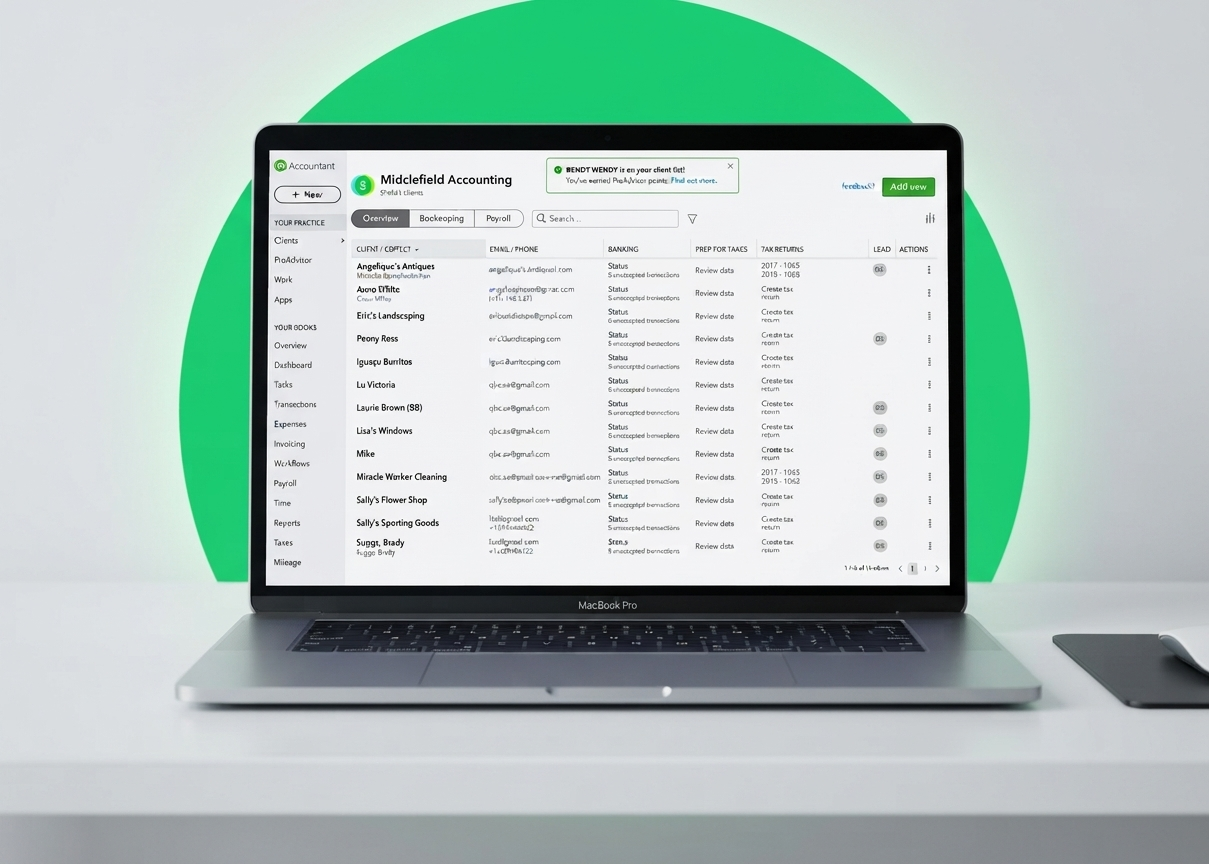
This trips a lot of business owners up. QuickBooks Online is the accounting software you or your team use to invoice customers, track expenses, and pay bills. QuickBooks Online Accountant (QBOA) is a separate, free portal built specifically for accountants and bookkeepers to manage multiple clients from one login.
Through QBOA, an accountant can:
- Add and switch between every client’s QuickBooks file from a single dashboard
- Access free training, certification, and CPD points through the ProAdvisor Programme
- Unlock wholesale/ProAdvisor pricing (often up to 50% off) to pass savings on to clients
- Use accountant-only tools like reclassify transactions, close books, and voided/deleted transaction reports
If you’re an accountant or bookkeeper wanting to set this up, you create your accountant login by signing up for QuickBooks Online Accountant directly on the QuickBooks Online Accountant website — it’s free, and you don’t need an existing QuickBooks subscription to register your practice.
7 Powerful Benefits of Hiring a QuickBooks Accountant
1. Fewer Errors and Cleaner Books
Bank feeds and auto-categorisation are useful, but they get things wrong — a personal purchase tagged as a business expense, a duplicate invoice, an unreconciled transfer between accounts. A QuickBooks Accountant reviews these regularly and can fix bookkeeping errors before they snowball into a messy year-end clean-up that costs far more to sort out later.
2. Real Time Saved
Most business owners underestimate how many hours a month go into invoicing, chasing receipts, and reconciling accounts. Handing this to a QuickBooks Accountant typically frees up several hours a week — time better spent on sales, service delivery, or simply switching off in the evening.
3. Support With Tax Returns
Yes — a QuickBooks Accountant can help with tax returns. For sole traders and landlords, that means preparing and submitting Self Assessment. For limited companies, it means Corporation Tax computations and statutory accounts filed with HMRC and Companies House. Because your accountant already has live access to categorised, reconciled data in QuickBooks, tax season stops being a scramble for missing receipts.
4. VAT Returns and Making Tax Digital Compliance
If you’re VAT-registered, your QuickBooks Accountant can prepare and submit VAT returns directly through QuickBooks’ HMRC-recognised MTD software — a legal requirement for VAT-registered businesses since 2019, and increasingly relevant for sole traders and landlords as Making Tax Digital for Income Tax rolls out from April 2026 for those earning over £50,000, dropping to £30,000 from April 2027 and £20,000 from April 2028.
5. Real-Time Financial Visibility
Instead of finding out how your business performed three months after the fact, a QuickBooks Accountant keeps your reports current — profit and loss, cash flow, aged debtors — so you can make decisions (hiring, pricing, cutting costs) based on where you actually stand today.
6. Genuine Cost Savings
Hiring a full-time, in-house bookkeeper or finance person in the UK typically costs £25,000–£35,000+ a year once salary, National Insurance, and pension contributions are included. A QuickBooks Accountant delivering the same core function through outsourced hours or a fixed monthly package usually costs a fraction of that — and can genuinely save your business money by catching missed expense claims, avoiding late-filing penalties, and flagging tax-efficient decisions early.
7. Free Access to Certified Expertise
Because QuickBooks Online Accountant is free for the accountant to join, and firms often pass on ProAdvisor software discounts to clients, small businesses frequently end up with certified expertise and cheaper software than if they set up QuickBooks independently and hired support separately.
Do You Need a QuickBooks Accountant for Your Small Business?
Not every business needs one from day one. As a rough guide:
- Sole trader, low transaction volume, comfortable with numbers? You may manage fine on QuickBooks alone, at least early on.
- VAT-registered, employing staff, or spending more than an hour a week on bookkeeping? This is usually the point where a QuickBooks Accountant starts paying for itself in time and avoided errors.
- Limited company? Statutory filing requirements alone make professional support worth having, even if you do day-to-day data entry yourself.
You don’t strictly need QuickBooks even if you have a bookkeeper — some bookkeepers work in other software — but pairing the two together is the most common and efficient setup, since it gives both you and your accountant live access to the same numbers.
Bookkeeper vs. Accountant: Which Do You Need?
These roles overlap but aren’t identical:
| Bookkeeper | Accountant | |
|---|---|---|
| Focus | Day-to-day recording, reconciliation | Tax strategy, statutory filings, compliance |
| Typical UK rate | £18–£45/hour or £120–£500/month | £50–£150/hour or £150–£500+/month |
| Best for | Ongoing transaction management | Year-end accounts, tax returns, advice |
In general, chartered accountants earn more than bookkeepers, reflecting the extra qualifications and liability involved. Many UK small businesses use both: a bookkeeper (sometimes the QuickBooks Accountant themselves) handles the monthly data entry, and a qualified accountant reviews and files at year end. Whether that’s “better” depends entirely on your business complexity — a simple sole trader may only need a bookkeeper, while a VAT-registered limited company usually benefits from both.
Why Do Some Accountants Not Like QuickBooks Online?
It’s a fair question, and the honest answer is: some do, some don’t. Complaints from accountants typically centre on a handful of specific issues rather than the platform as a whole:
- Frequent price increases — QuickBooks Online’s UK pricing rose again in January 2026, with the Plus plan jumping from roughly £34 to £50 a month, which frustrates practices managing many client subscriptions.
- Bank feed and reconciliation quirks on certain UK banks, which can create extra clean-up work.
- Preference for other software — some UK practices prefer Xero or FreeAgent for workflow reasons, not because QuickBooks is fundamentally flawed.
Despite this, the reality is that the majority of working accountants and bookkeepers do use QuickBooks — it remains one of the most widely adopted platforms among UK small businesses and accountancy practices, backed by HMRC-recognised MTD compatibility and a large ProAdvisor network.
Is QuickBooks Better Than an Accountant?
This is comparing two different things. QuickBooks is software; an accountant is a professional. QuickBooks can automate data entry, generate reports, and flag basic errors — but it can’t interpret your numbers, advise on tax strategy, catch a misclassified transaction that “looks fine” on the surface, or represent you if HMRC has questions. The two work best together: QuickBooks handles the data, your accountant handles the judgement.
How Much Does a QuickBooks Accountant Cost in the UK?
Costs vary by business size and how much you need done, but here’s a realistic 2026 breakdown:
Human service (bookkeeper/accountant fees):
| Business type | Typical monthly cost |
|---|---|
| Sole trader / freelancer | £100–£150/month, or a one-off Self Assessment fee |
| Small limited company | £200–£350/month |
| Growing SME | £300–£1,000+/month |
Hourly rates generally range from £18–£30/hour for a freelance bookkeeper up to £50–£150/hour for a qualified accountant, with senior tax advisory work sitting at the top end. Is £300 a month reasonable for bookkeeping? For a small limited company with VAT returns, payroll, and regular reconciliation, yes — that sits squarely in the normal UK range. For a very simple sole trader with low transaction volume, it would be on the high side.
Software subscription (separate from accountant fees): QuickBooks Online UK plans span roughly £19 to £90+ a month depending on the tier (Simple Start through Advanced), though prices change periodically — always confirm current rates directly with QuickBooks. Many businesses reduce this cost by getting their QuickBooks Accountant to add them as a client, since ProAdvisors can often pass on wholesale discounts.
The cheapest way to use QuickBooks is usually to be added as a client under your accountant’s ProAdvisor account rather than subscribing independently, and to choose the lowest plan that covers your actual needs (most sole traders don’t need Advanced-tier features).
Salary of a QuickBooks Accountant: for an in-house, QuickBooks-certified bookkeeper or accountant in the UK, salaries commonly range from roughly £24,000–£35,000 for a bookkeeper up to £35,000–£55,000+ for a qualified accountant, depending on experience, qualifications, and location.
Can you use QuickBooks Accountant for free? The QBOA portal itself is free for accountants to join and use for practice management and training. The QuickBooks Online subscription each client uses, however, is a paid product (aside from limited free trials).
Is QuickBooks Easy or Hard to Learn?
For basic tasks — invoicing, expense tracking, viewing reports — most users pick up QuickBooks Online within a few hours. Where it gets harder is bank reconciliation, VAT settings, and correcting mistakes once they’ve compounded — which is exactly the gap a QuickBooks Accountant fills, so you get the simple interface without needing to master the technical side yourself.
Is QuickBooks Shutting Down? Addressing the Rumours
No — QuickBooks Online is not shutting down. This rumour tends to resurface around three real but unrelated events:
- Product changes, such as Intuit discontinuing older QuickBooks Desktop versions for new UK sales, which some people conflate with QuickBooks Online disappearing entirely.
- Price increases, which push some users to look at alternatives like Xero, FreeAgent, or Sage — fuelling “what are people replacing QuickBooks with” searches, without QuickBooks actually closing.
- AI concerns. AI tools are automating routine data entry and categorisation, but they are not replacing bookkeepers and accountants outright — they’re shifting the job toward review, advisory work, and exception-handling, which still requires a human who understands your business.
What’s the $20 Fee Sometimes Mentioned With QuickBooks?
This usually refers to the entry-level Solopreneur plan in the US market, aimed at single-person businesses and gig workers, priced separately from the standard Simple Start/Essentials/Plus/Advanced tiers. UK pricing and plan names differ, so if you’ve seen this figure, check it against the current UK pricing page rather than assuming it applies directly.
How Do I Choose the Right QuickBooks Accountant?
A few things worth checking before you commit:
- Certification — are they a listed QuickBooks ProAdvisor, and ideally also AAT, ACCA, or ICAEW qualified?
- Industry experience — have they worked with businesses like yours (VAT-registered, e-commerce, contractors, etc.)?
- Clear pricing — a fixed monthly fee with a defined scope beats vague hourly billing for most small businesses.
- Responsiveness — will they answer questions during the month, or only appear at year end?
- MTD readiness — can they confirm your VAT and, if relevant, Income Tax filings are fully MTD-compliant?
- References or reviews — genuine client feedback, not just marketing claims.
Frequently Asked Questions
What does a QuickBooks Accountant do?
They manage your bookkeeping, reconcile transactions, prepare VAT and tax filings, and produce financial reports — all within your QuickBooks Online account.
Do I need a QuickBooks Accountant for my small business?
Not always, but most VAT-registered or growing businesses find it saves significant time and reduces costly errors.
How much does a QuickBooks Accountant cost in the UK?
Typically £100–£350 a month for a small business, depending on complexity, plus the separate QuickBooks software subscription.
Can a QuickBooks Accountant help with tax returns?
Yes — Self Assessment for sole traders and landlords, and Corporation Tax for limited companies.
What is the difference between QuickBooks and a QuickBooks Accountant?
QuickBooks is the software; a QuickBooks Accountant is the trained professional who uses it to manage your books on your behalf.
Can a QuickBooks Accountant fix bookkeeping errors?
Yes, correcting miscategorised transactions, duplicates, and reconciliation issues is a core part of the job.
Is QuickBooks suitable for small businesses?
Yes — it’s one of the most widely used platforms among UK small businesses, particularly since it’s HMRC-recognised for Making Tax Digital.
Can a QuickBooks Accountant help with VAT returns?
Yes, including preparing, reviewing, and submitting MTD-compliant VAT returns.
How do I choose the right QuickBooks Accountant?
Check for ProAdvisor certification, relevant experience, transparent pricing, and MTD compliance before committing.
Can a QuickBooks Accountant save my business money?
Often yes — through caught errors, claimed expenses, avoided penalties, and tax-efficient advice that outweighs their fee.
Is it better to hire a bookkeeper or an accountant?
Depends on complexity: a bookkeeper covers day-to-day data entry, while an accountant is needed for statutory filings and tax strategy. Many small businesses use both.
Do real accountants use QuickBooks?
Yes, widely — alongside other platforms like Xero and Sage, depending on the practice’s preference.
Is QuickBooks better than an accountant?
No — they serve different purposes. Software handles data; an accountant provides judgement, compliance, and advice.
Who gets paid more, a bookkeeper or an accountant?
Qualified accountants generally earn more than bookkeepers, reflecting additional qualifications and responsibility.
Is AI replacing bookkeepers?
AI is automating routine data entry, but human oversight is still needed for judgement calls, compliance, and advisory work.
Conclusion
A QuickBooks Accountant bridges the gap between powerful software and the judgement, compliance knowledge, and time you don’t have to spare running a business. For most VAT-registered or growing UK small businesses, the monthly cost is more than offset by time saved, errors avoided, and tax efficiencies found — while sole traders with very simple affairs may comfortably manage with QuickBooks alone, at least for now. If you’re ready to bring one on board, start by confirming ProAdvisor certification, getting a clear fixed-fee quote, and checking they’re set up for Making Tax Digital before you sign anything.